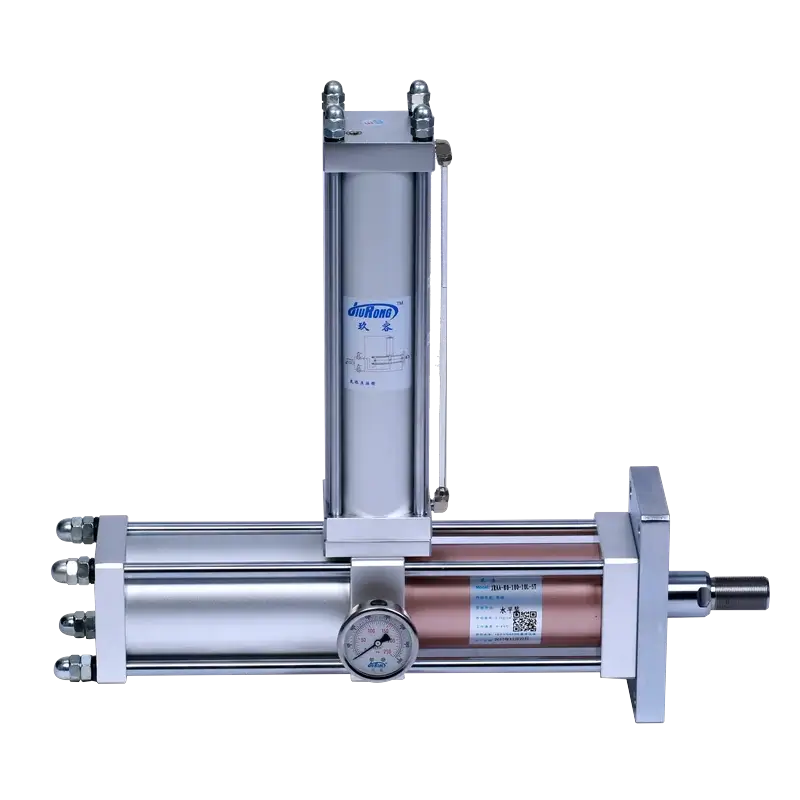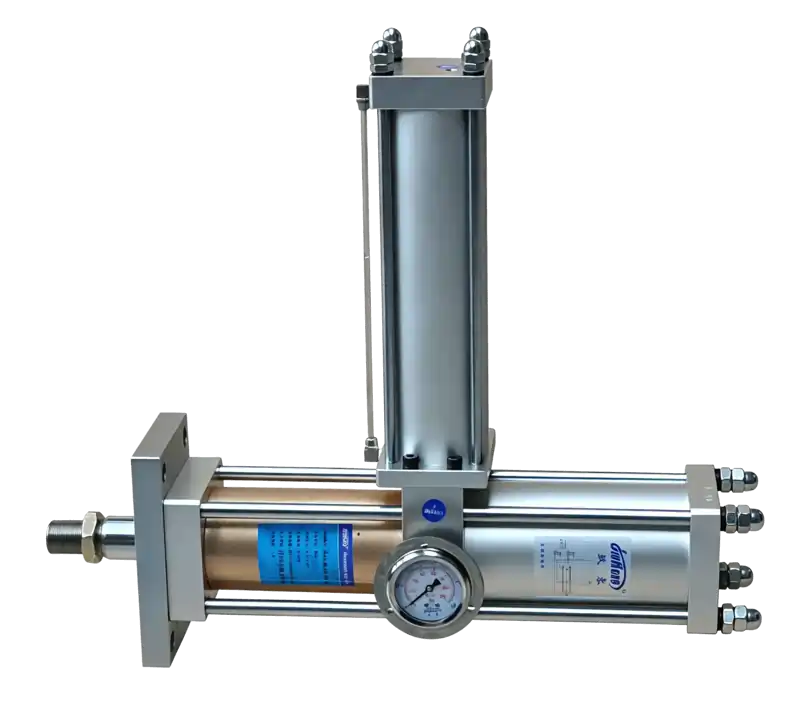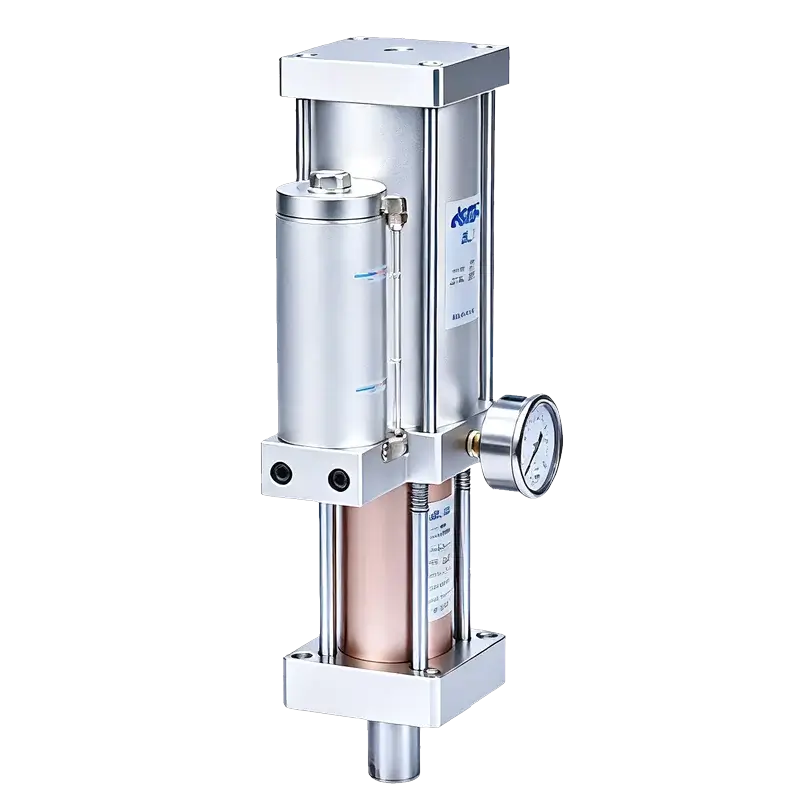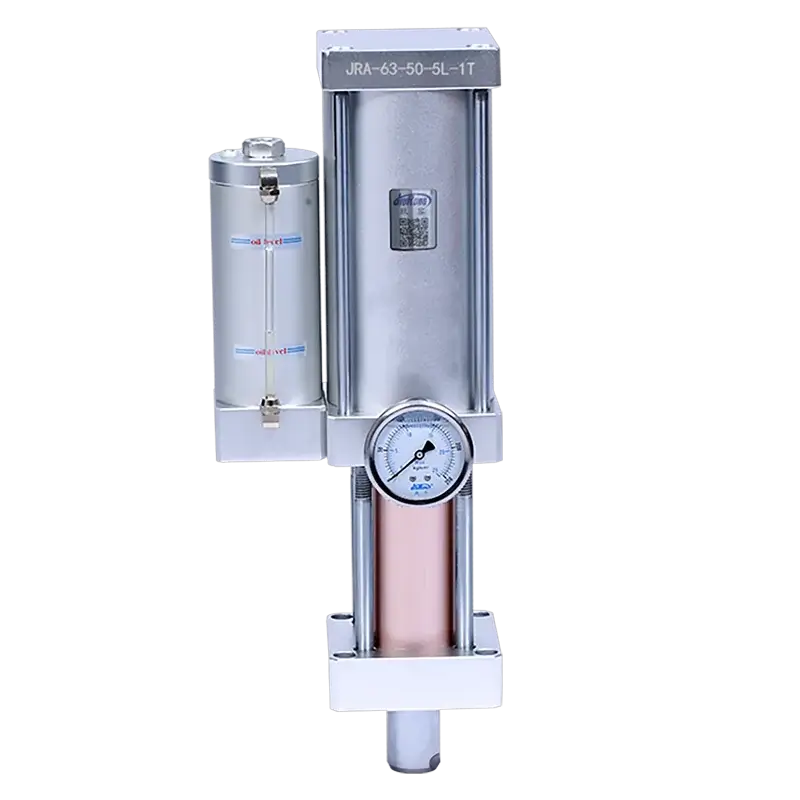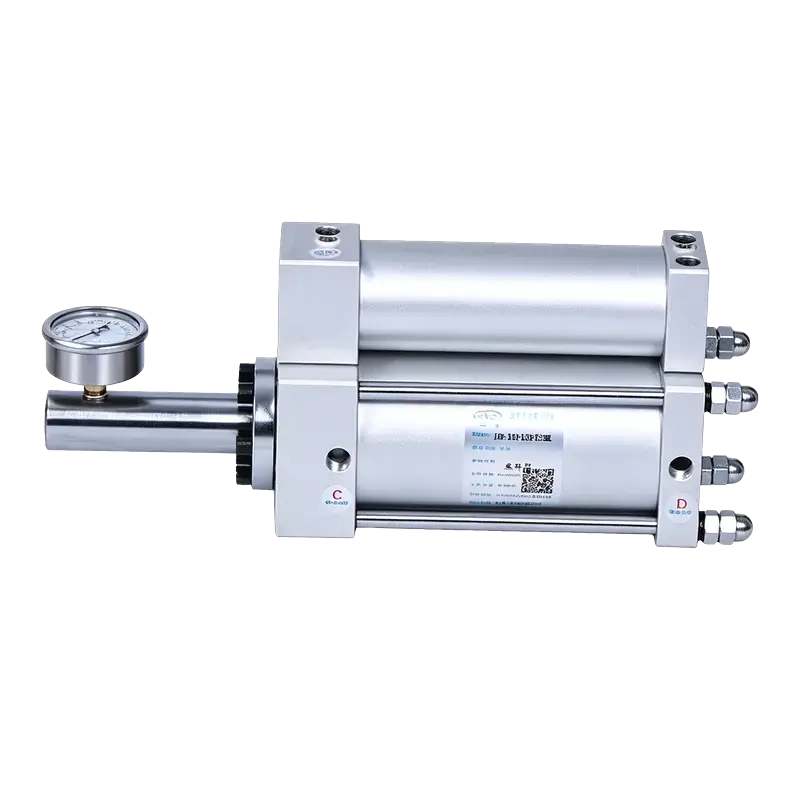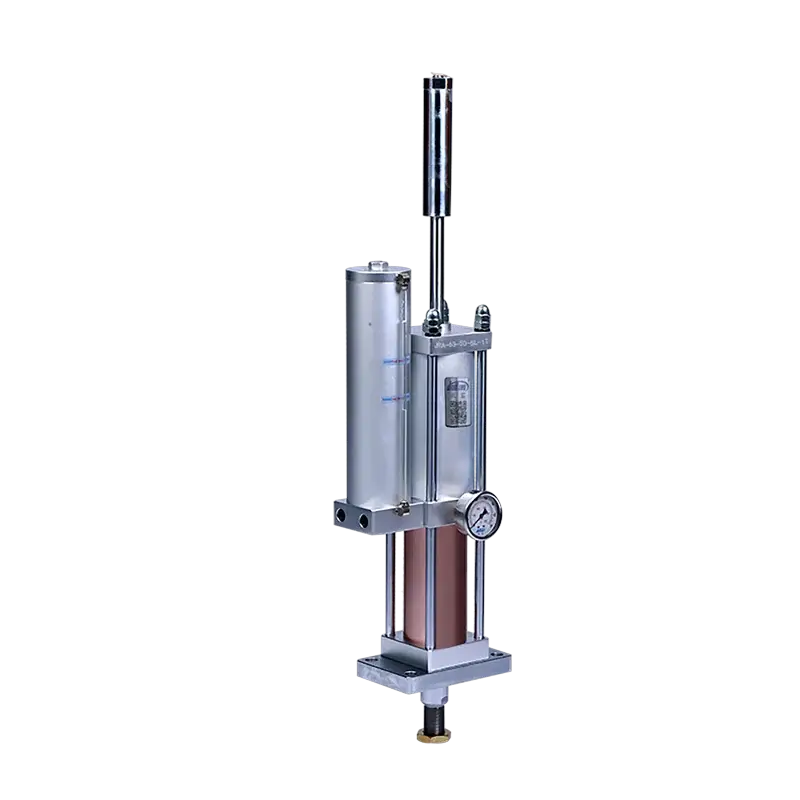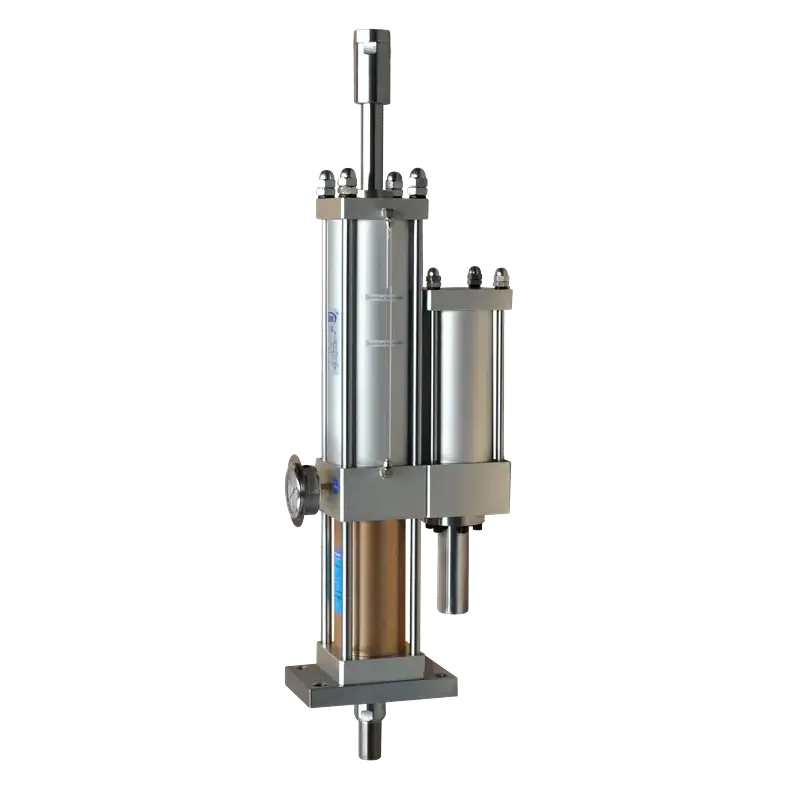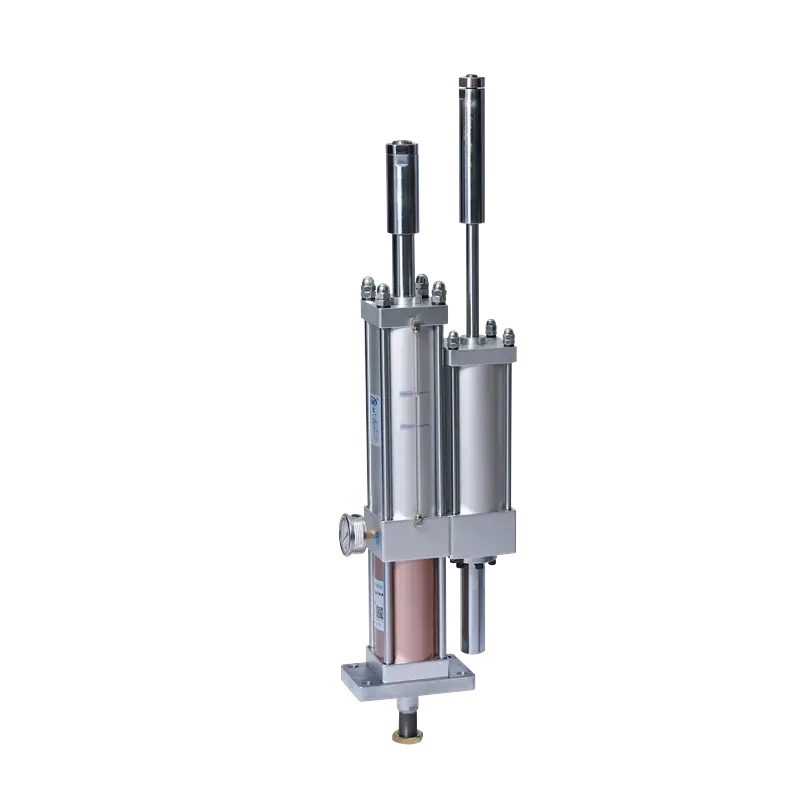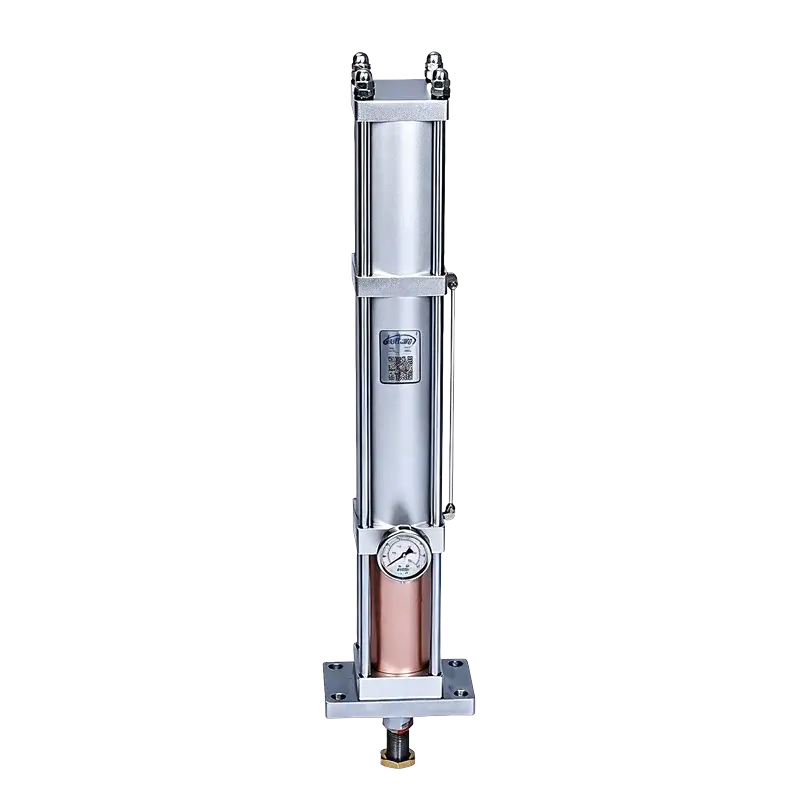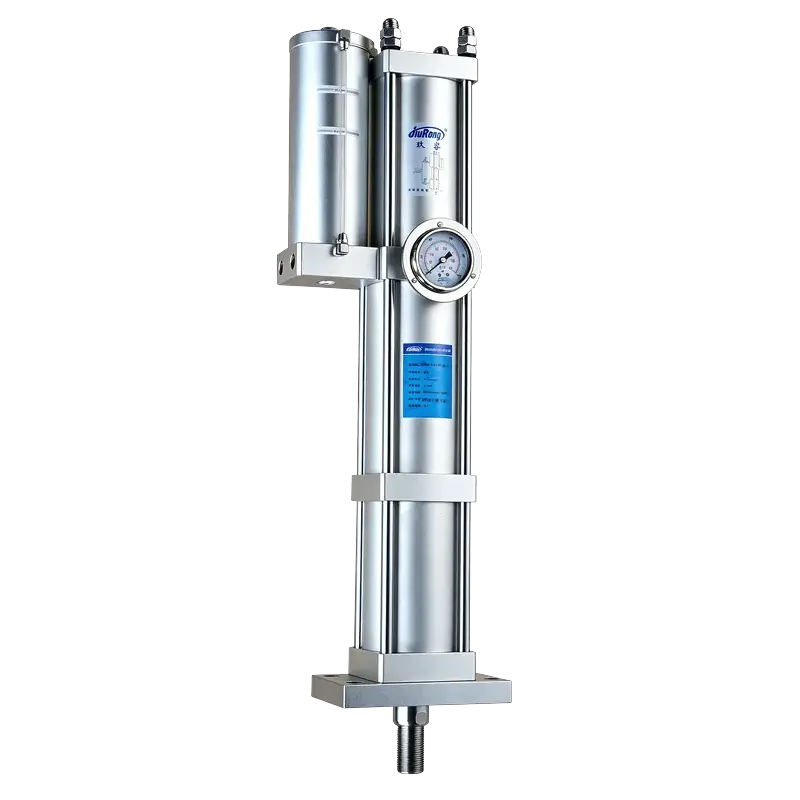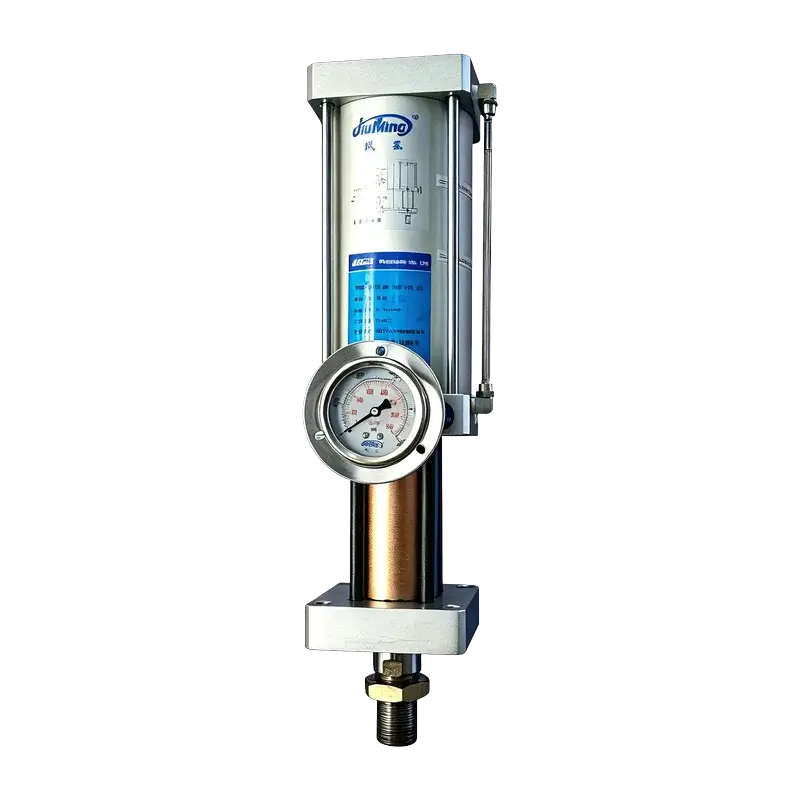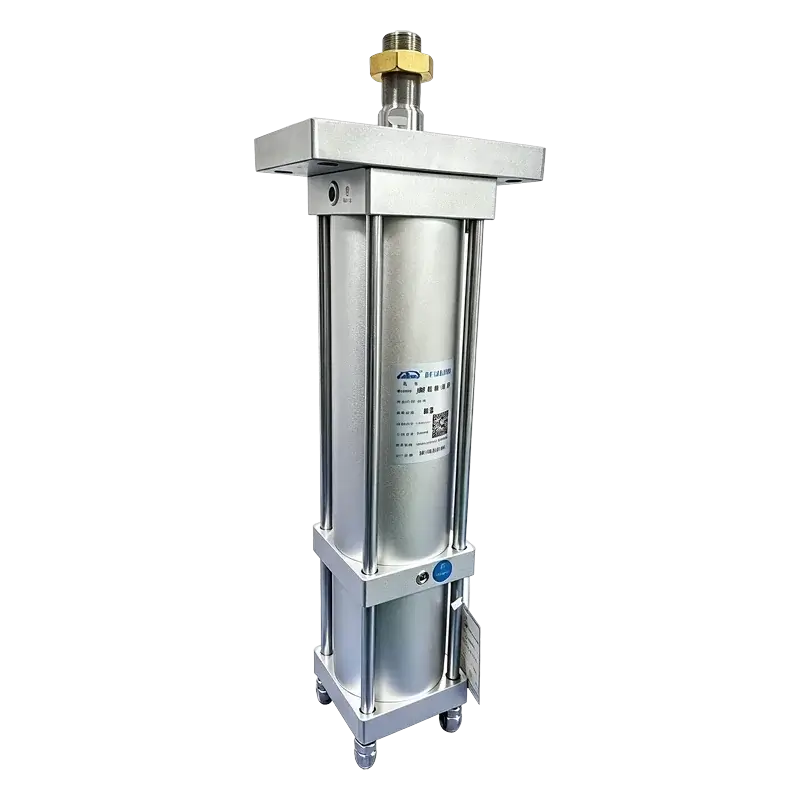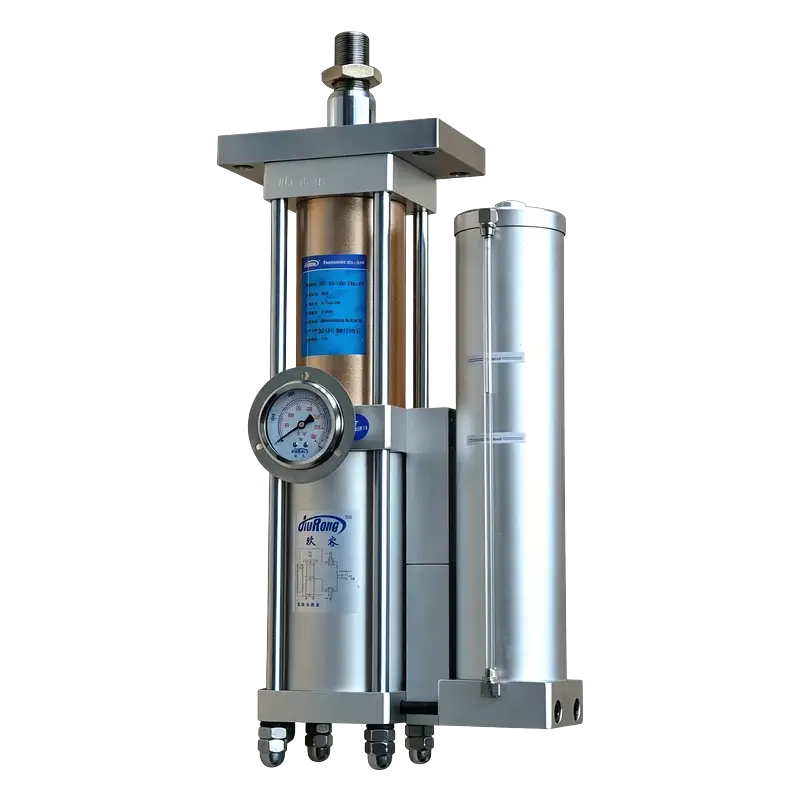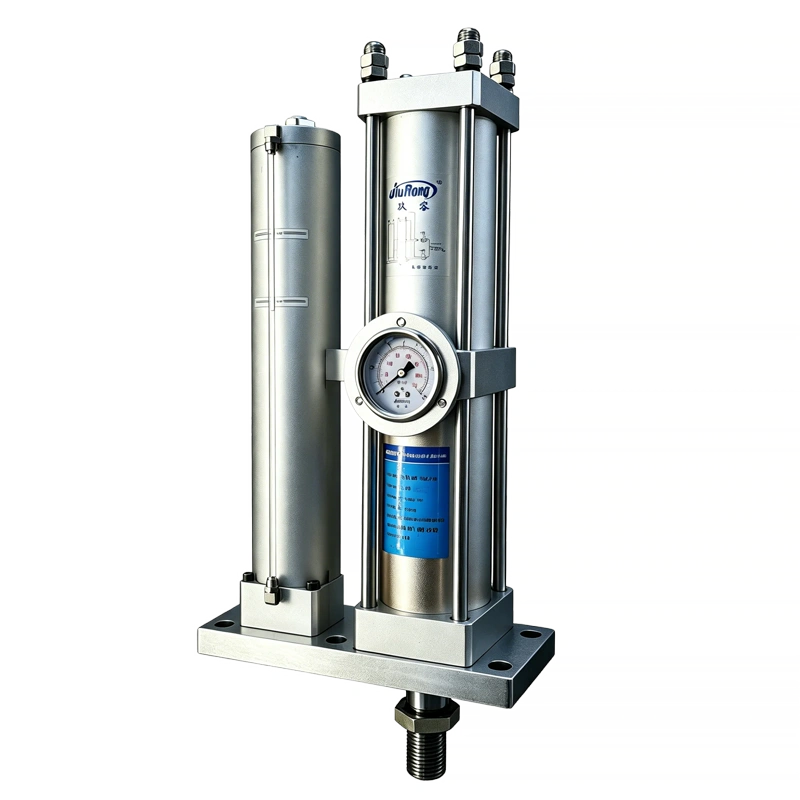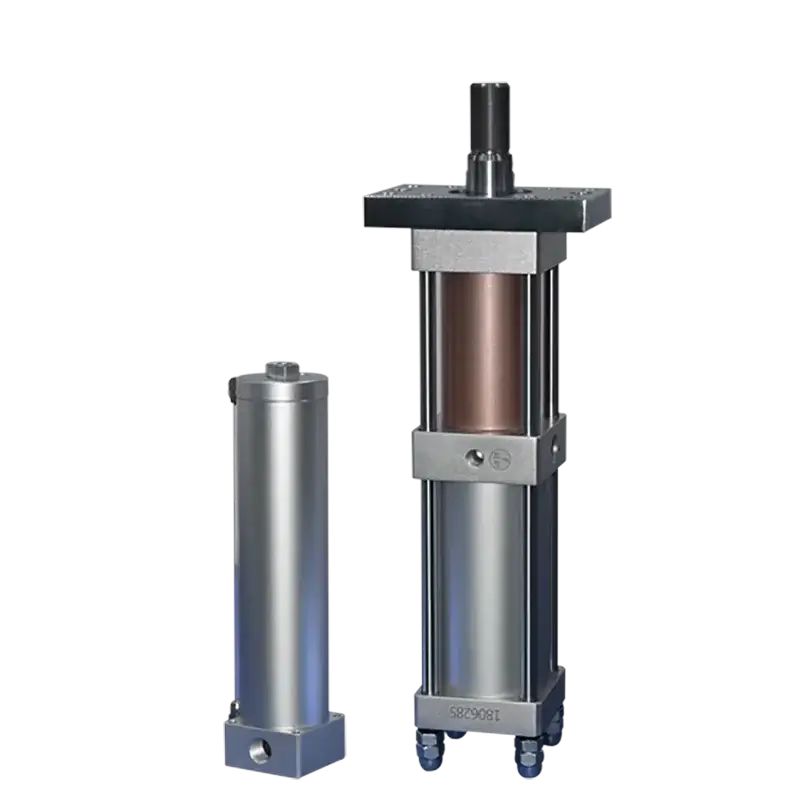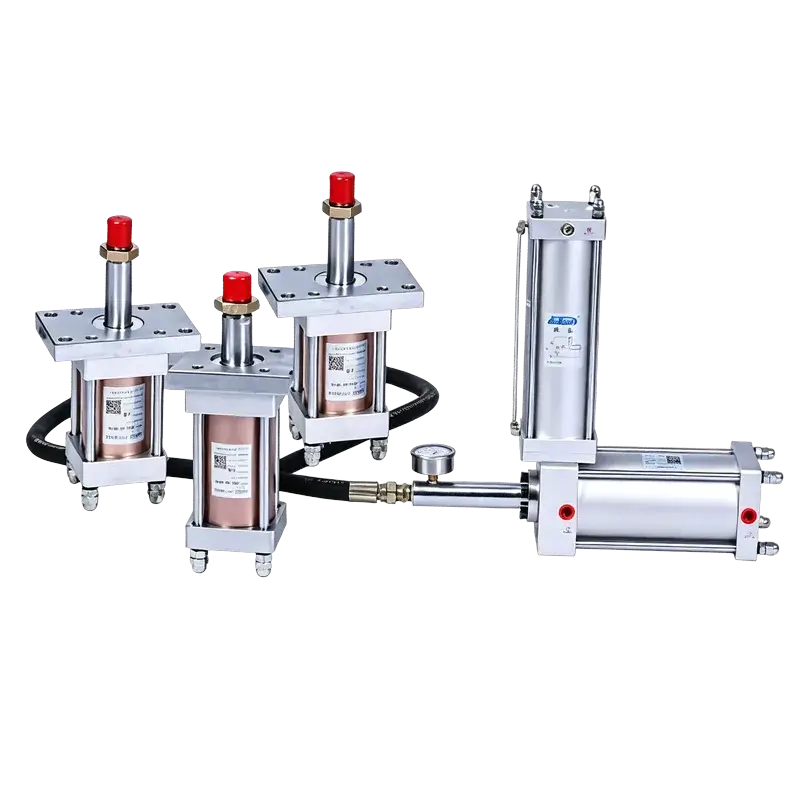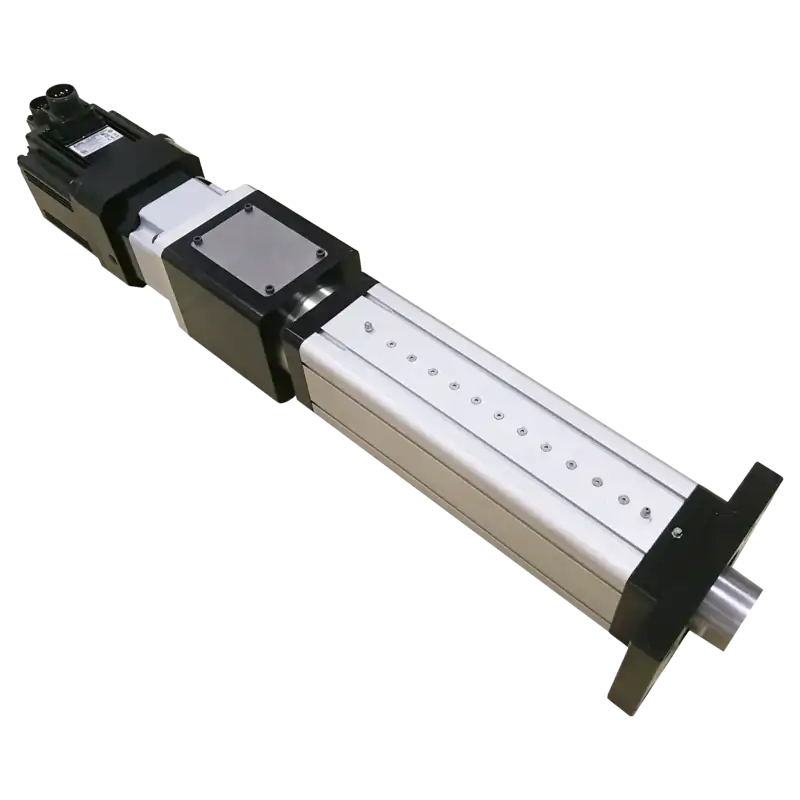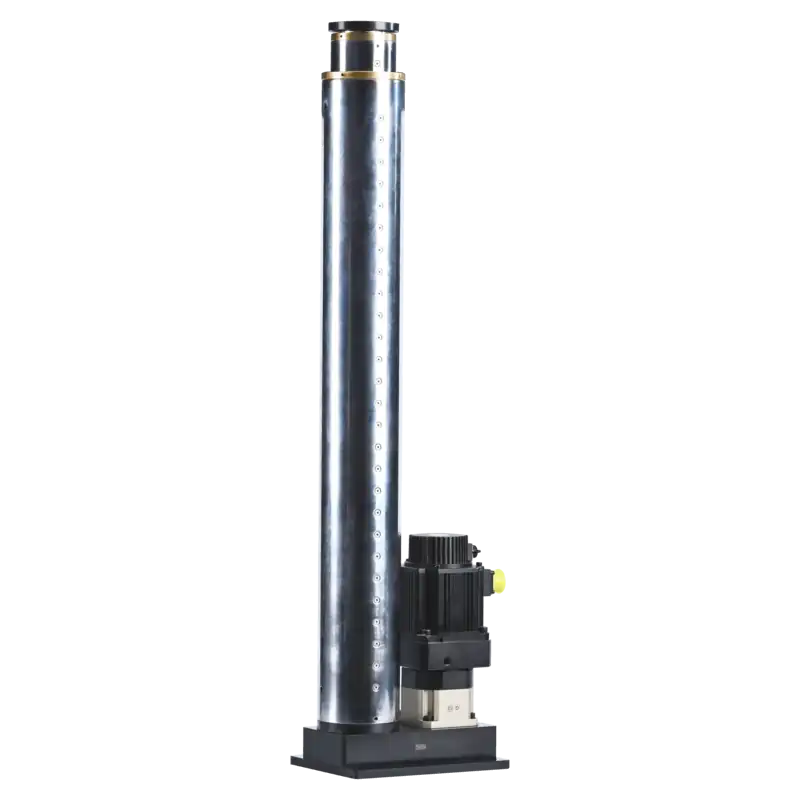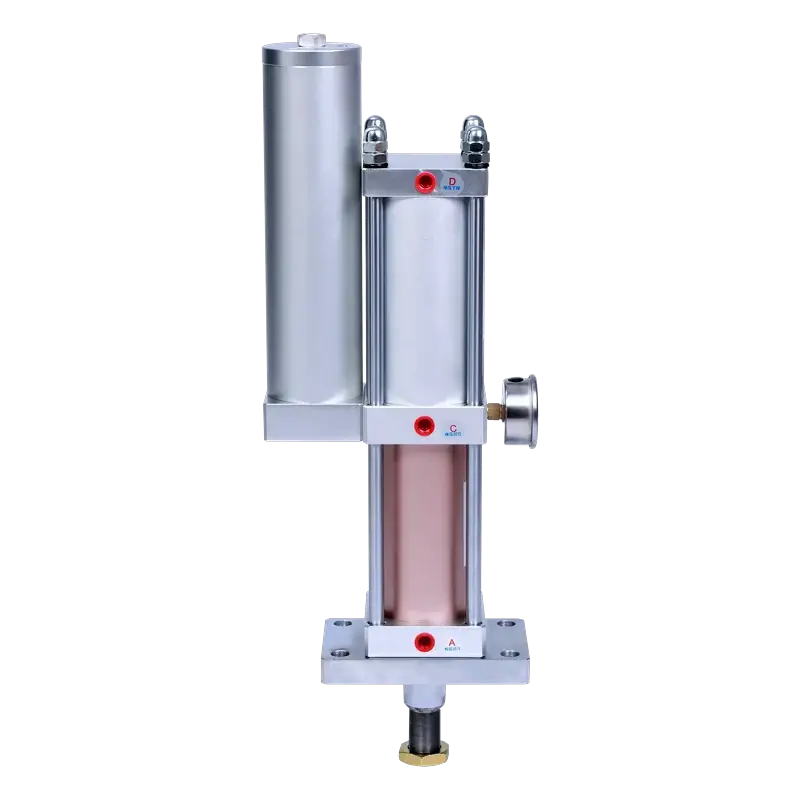
JRA — Standard Pre-press Type
The workhorse of the lineup. 4-step cycle: fast approach → slow pressing → boost forming → return. Vertical or horizontal mounting for general-purpose pressing.
- 4-step cycle
- Vertical & horizontal
- Custom up to 150T
Every series, every platform — one catalog
Overview: JiuRong builds three complementary actuation platforms — hydro-pneumatic boosting cylinders that turn shop air into hydraulic force, servo electric cylinders for programmable precision motion, and air-driven gas boosters for electricity-free gas amplification. This page aggregates all 22 series and compares the platforms side by side.
Every JiuRong series on one page. Pick a product type to focus the catalog, then use the browse-mode switcher to change between list and gallery cards.
The workhorse of the lineup. 4-step cycle: fast approach → slow pressing → boost forming → return. Vertical or horizontal mounting for general-purpose pressing.
Horizontal-mount variant of the JRA for inline installation on automated lines and conveyor-fed systems where vertical space is limited.
Compact footprint standard pre-press cylinder for light-to-medium duty where space is constrained but full 4-step cycle performance is required.
Full-stroke high force with a 3-step cycle (no separate boost segment). Short stroke, high output, simple pneumatic-like operation.
Block-mount direct pressure cylinder with integrated manifold for close-pitch multi-cylinder arrangements on die sets.
A separate direct-acting booster for driving an external oil cylinder, keeping the pressure-generation unit away from the working axis.
A flange-mounted direct-pressure booster for vertically arranged external-cylinder systems and engineered multi-cylinder layouts.
Adjust the high-force power stroke length to match the application. Set the exact working window for different part heights without changing tooling.
Adjust the total approach stroke for varying die shut heights while the boost stroke remains fixed.
Both total stroke and power stroke are independently adjustable. Maximum flexibility for job shops and frequently changing part geometry.
High-speed approach (250–500 mm/s) for rapid cycling. Optimized flow paths reduce air consumption and cycle time.
The fastest in the range with cycle rates up to 60 per minute, designed for high-volume automated production lines.
Compound two-stage design in a compact body. High approach speed combined with adjustable boost force in a minimal footprint.
Ultra-compact reverse-mount compound cylinder for small automation cells and robotic end effectors.
Rod extends upward (inverted mounting). Cylinder body mounts below the work surface for clean top-side access.
Two cylinders paired side-by-side for balanced force across wider tooling. Up to 40% length reduction vs. a single large-bore cylinder.
Oil reservoir is a separate unit connected by hydraulic hose. The cylinder body fits tight spaces while the reservoir mounts remotely.
Air cylinder and oil cylinder are completely separated, connected only by a hydraulic line — no risk of air-oil mixing.
Inline and parallel servo electric cylinders with ball or roller screw drive. Four duty classes from ≤ 5 kN precision assembly to 382 kN heavy pressing.
Nested multi-stage screw extends 3–10× the retracted length. Long stroke from a compact envelope with closed-loop positioning.
Reciprocating air-driven gas boosters for common industrial gas boosting and recovery duties. Ratios and flow sized to the gas and inlet condition.
High-ratio boosters for inert and specialty gases (N₂, Ar, CO₂, H₂) requiring ultra-high outlet pressure with intrinsically safe operation.
Platform comparison
Three platforms, three different jobs. Compare output capability, control, energy and cost before committing to a technology.
| Dimension | Hydro-Pneumatic Cylinder | Servo Electric Cylinder | Air-Driven Gas Booster |
|---|---|---|---|
| Output capability | 1–150 T linear force (custom) | 0.76 kN – 382 kN linear force | Gas pressure up to 100 MPa outlet |
| Motion profile | Two-stage: fast approach + short power stroke | Fully programmable position / speed / force | Reciprocating continuous compression |
| Control & feedback | On/off valve control, open-loop | Closed-loop servo with encoder feedback | Self-regulating on air supply, no electronics |
| Energy source & use | Shop air, consumed mainly during boost | Electricity on demand, high efficiency | Shop air only — zero electricity |
| Maintenance | No pump or valve group; minimal upkeep | Lube-for-life option; belt check on parallel drives | Oil-free, grease-packed, minimal upkeep |
| Relative initial cost | Low | Higher (servo motor + drive) | Medium |
| Best for | Intermittent high-force pressing, riveting, punching | Precision positioning, recipes, production data | Explosion-proof gas boosting in hazardous areas |
Comparison values describe typical catalog configurations. Final selection should be verified against the actual process data, environment and duty cycle.
Quick qualification
Start from the primary production constraint, then verify against the comparison table above.
Send the process data and we will confirm the recommendation.
Direct answers
Practical answers for choosing between platforms and series.
Start from the primary constraint. If you need high force only near the end of travel, start with a hydro-pneumatic cylinder. If motion must be programmable and measurable, start with a servo electric cylinder. If you must compress gas without electricity, start with an air-driven gas booster.
For intermittent, short-power-stroke operations a hydro-pneumatic cylinder delivers equivalent force without a pump, tank, hoses or the heat and maintenance of a hydraulic system. Continuous high-pressure duty or long high-force travel still favors a hydraulic power unit.
When programmable position profiles, closed-loop accuracy, force-displacement monitoring or frequent recipe changes matter more than raw compact force. Servo cylinders also generate production data for traceability and quality analysis.
Anywhere gas must be amplified without electricity: nitrogen charging, leak testing, gas recovery and hazardous-area installations. They are intrinsically safe and run from the same compressed-air supply as the rest of the plant.
Yes. Hydro-pneumatic cylinders support custom bore, stroke, tonnage (to 150 T), mounting flanges and sensor options; electric cylinders are configured by force class, stroke and screw type; gas boosters are sized to gas, ratio and flow.
Application engineering
Send the force, stroke, control and environment requirements with an installation drawing. We will recommend the technology, series and next engineering checks.